BG-139
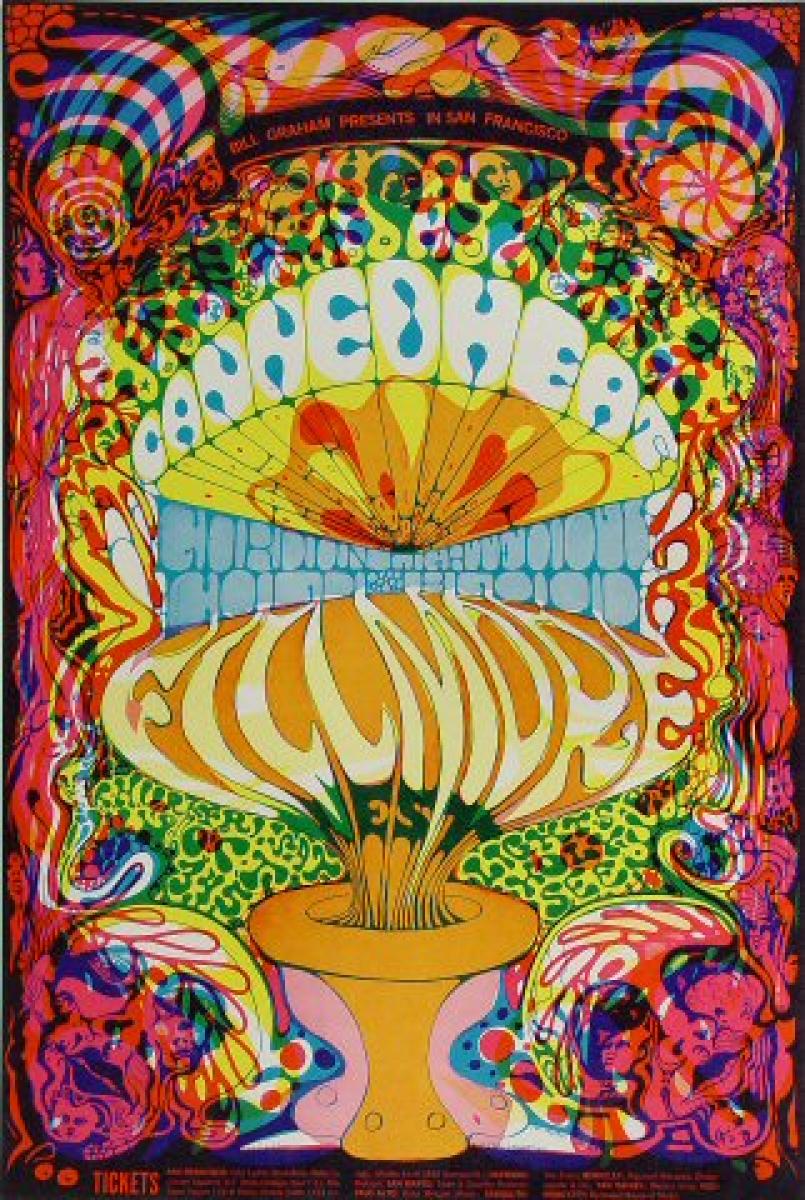
BG-139 · Lee Conklin
San Francisco
Gordon Lightfoot
Cold Blood
On Thursday, October 3, 1968, Bill Graham opened a three-night weekend at the Fillmore West around a band that had become one of the house's most dependable draws: Canned Heat, the Los Angeles blues-boogie outfit riding high off "On the Road Again" and a summer of festival sets. They topped a bill that ran Canned Heat, then Gordon Lightfoot, then Cold Blood, with light projections by Holy See, and the engagement held the stage through Saturday, October 5 (per chickenonaunicycle's Fillmore West list, the Grateful Dead Archive at UC Santa Cruz, and Wolfgang's, which all give the October 3–5 dates and the same billing order).
It is a wonderfully mismatched bill, and that is part of the charm. Canned Heat brought the stomping, amplified country blues of Alan Wilson and Bob Hite — the kind of set that turned a ballroom floor into one long shuffle. Gordon Lightfoot, by contrast, was the Canadian singer-songwriter already known for "Early Mornin' Rain" and "For Lovin' Me," a solo acoustic voice sharing a Fillmore stage with a boogie band and a horn-driven soul act. And opening was Cold Blood, the Bay Area band fronted by the formidable Lydia Pense — at this point still early in their run, not yet the San Francisco horn-soul institution they would become, which makes a bottom-of-the-bill slot at the Fillmore West in October 1968 a neat little "you were there before everyone else" footnote.
The artifact that anchors this weekend is BG-139, and it is a real one. Lee Conklin drew it and Tea Lautrec Litho printed it (per GDAO item 390882, which reproduces the "Bill Graham #139" inscription, and per Wolfgang's and the Concert Poster Gallery market records, which catalog it as BG-139-OP-1). Conklin was in the middle of the extraordinary year of Fillmore West posters that made his name — the swirling, metamorphic ink work where faces dissolve into letterforms and letterforms grow eyes. The commentary on the surviving copies (per Wolfgang's) notes that the design was deliberately printed slightly out of register, so that the image reads a touch misaligned — an effect collectors have long described as a light show seen through an altered lens. We'll flag that as interpretation rather than gospel: it is the catalogers' reading of the artwork, repeated across listings, not a documented statement of Conklin's intent. What is not in doubt is that BG-139 belongs to the heart of his Fillmore West period, and that a Conklin original for a Canned Heat weekend is a genuinely desirable piece — the graded copies that surface are routinely slabbed and signed.
A note on dates, because this is the kind of thing that trips up a calendar page. October 3, 1968 was a Thursday, and this was the FIRST of the three nights — the opener, not a mid-run date that happens to touch October 3. The COAU list carries three consecutive identical entries for October 3, 4, and 5, the familiar signature of a Graham weekend run, and the poster itself reads "October 3-5." So 10-03 gets the honest claim to this one as its opening night.
The year 1968 wins the day on the strength of its paper trail. There was a real temptation to anchor October 3 on 1969 instead: that Friday, the Family Dog on the Great Highway opened its own three-night weekend with Charley Musselwhite, the comedy duo Congress of Wonders, and Kaleidoscope, listed in COAU as FD-691003 running October 3–5, 1969. It is a lovely, very Family-Dog bill — a Chicago-via- West-Coast harmonica bandleader, an absurdist comedy act, and David Lindley's genre-smashing Kaleidoscope all on one stage out by the ocean. But the honest reporting is that its poster is thinly documented: COAU gives the designer as "Unknown," and I could not independently confirm either the catalog number or an artist through any reachable archive. The two sources that might settle it — classicposters.com and famsf.org — are browser-only and unreachable for this run, so FD-691003 stays a secondary mention and an open question for the human gate, not the hero.
There is also a scheduling reason to prefer 1968. The 1969 Fillmore West weekend immediately next door — Janis Joplin's homecoming with Santana, Blues Image, and John Sebastian, October 2–5 — is being carried by the October 2 page as its hero, and its span reaches October 3. Reusing that run here would double-render the same poster across two calendar days, exactly the collision this pipeline guards against. Anchoring October 3 on Canned Heat's BG-139 keeps the two days cleanly distinct: the Joplin run is the October 2 story, and the Conklin Canned Heat weekend is the October 3 story.
So the October 3 chronicle lands on a Thursday night in 1968, a Conklin poster, a boogie band at the top and a future soul institution at the bottom, and a Canadian folksinger improbably in between — a reminder that the Fillmore West bill was, as often as not, a conversation between genres that had no business sharing a stage, and were all the better for it.
Verification Notes
ANTAGONIST VERIFIED (check-claims ok: chickenonaunicycle + wolfgangs; also GDAO 390882, Concert Poster Gallery). Canned Heat / Gordon Lightfoot / Cold Blood, Fillmore West, Oct 3-5 1968 (Thu-Sat; 10-03 = opening night). Designer Lee Conklin; printer Tea Lautrec Litho. Oct 3 1968 = Thursday (verified). Catalog BG-139 sits correctly between FD-139 neighbors in the BG series. 'Out-of-register / LSD-filter' artwork note = catalogers' interpretation (hedged, not asserted intent).
Were You There?
Do you have memories of this show, or an original BG-139 poster? On This Day in Art Rock History celebrates the people who lived through the psychedelic era. Your stories and collections matter to this archive.
Comments