

Howlin' Wolf at the Avalon
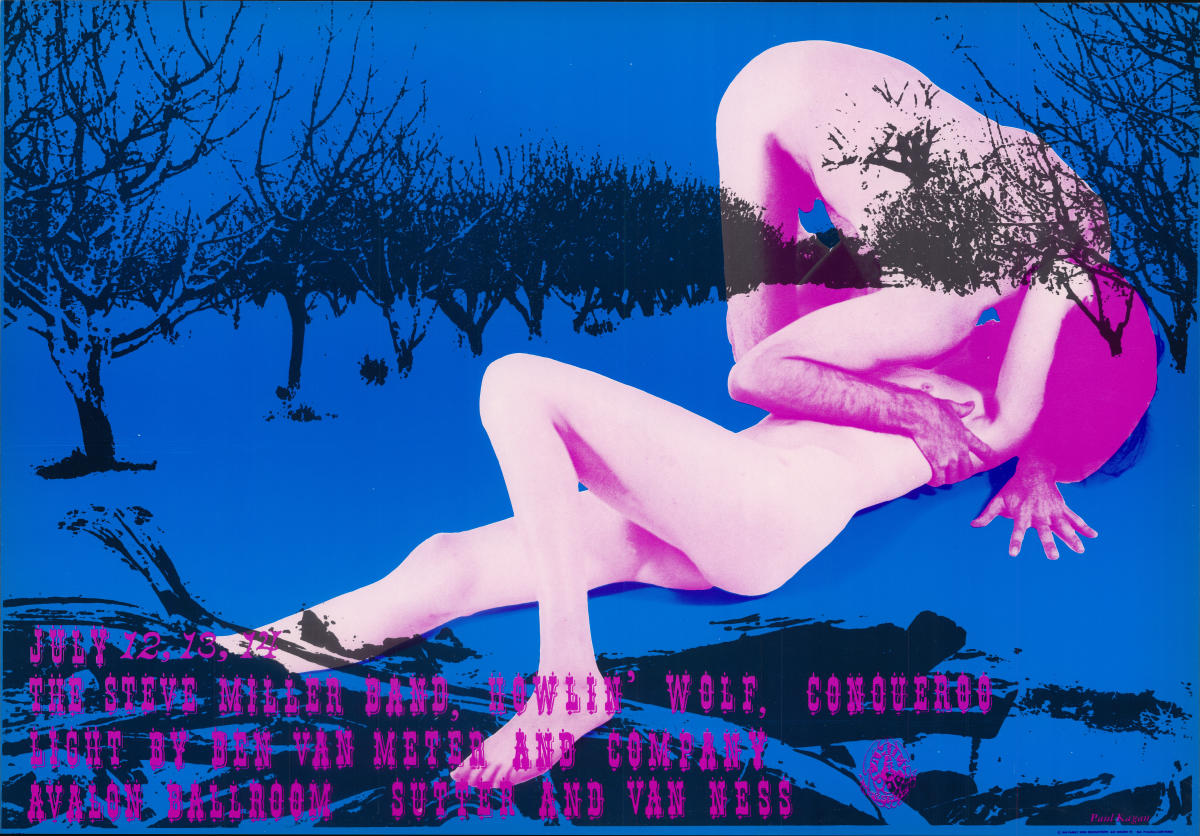
FD-127 · Paul Kagan
San Francisco
Howlin' Wolf
Conqueroo
On Friday, July 12, 1968, Howlin' Wolf stood on the Avalon Ballroom stage -- the most physically overwhelming performer the blues had ever produced, a Chicago giant singing to a room of San Francisco dancers roughly a third his age. The weekend card, July 12-14 per chickenonaunicycle, put the Steve Miller Band above him and the Conqueroo below, with Ben Van Meter's light show on the walls; the poster, per wolfgangs, is FD-127, built by the photographer Paul Kagan.
The billing order tells you what year it is. Steve Miller had been in San Francisco barely two years, but his band had done what the first-generation ballroom bands mostly hadn't: signed a serious contract in the wake of Monterey and delivered on it. The debut album, "Children of the Future," had appeared earlier in 1968, with "Sailor" to follow before the year was out. Miller was a Chicago-schooled player himself -- his apprenticeship ran through the same Chicago blues world where Wolf reigned -- and headlining over Wolf was the kind of billing the market dictated and the musicians themselves would have regarded with appropriate irony.
Because underneath was the source. Chester Burnett was in his late fifties that summer, one of the great pillars of postwar Chicago blues, and everything the ballroom scene prized -- volume, intensity, abandon on stage -- he had been doing professionally since before most of the audience was born. The Avalon habit of booking the elders was Chet Helms' quiet curriculum, the Family Dog's version of the same lesson Bill Graham taught across town: Big Mama Thornton had played these bills, Lightnin' Hopkins had, and now Wolf's turn came with a young white blues-rock band's name above his. What the audience saw, by every surviving account of Wolf in this era, made the billing order meaningless the moment he started to sing.
Opening were the Conqueroo, Austin's psychedelic emissaries -- part of the pipeline that ran between the Texas scene around the Vulcan Gas Company and the San Francisco ballrooms, the same route the 13th Floor Elevators had traveled to the Avalon two years earlier. Their presence on the card is a reminder that by 1968 the Family Dog's booking map was national even when its sensibility stayed neighborhood-sized.
Kagan's FD-127 is a photographic poster -- his medium was the camera rather than the pen -- and its date in the wolfgangs record is the opening Friday; the full Friday-through-Sunday run rests on the period show list and is flagged accordingly. The same weekend, across town, the Fillmore West's "Blues Bash" was closing with Ike & Tina Turner and Blue Cheer over Freddie King: two ballrooms, two promoters, and on a single July weekend in 1968 a San Franciscan could choose between Howlin' Wolf and Ike & Tina. No city's dance-hall calendar has aged better.
There is an elegiac note under the page, though nobody in the room could have heard it yet. The Avalon was in its final season: the Family Dog's permit fights with the city would end the ballroom's run within months, and the FD numbers -- 127 now -- were counting toward a stop. A summer weekend with Wolf in the house is as good a place as any to mark what the room was for: the elders and the apprentices on one stage, a photograph on the poster, and the dance floor doing the rest.
Verification Notes
ANTAGONIST 2026-07-03 (headless). VERIFIED: 1968-07-12 Avalon bill Steve Miller Band / Howlin' Wolf / Conqueroo; light show Ben Van Meter; poster FD-127 by Paul Kagan (photographer) (coau FD list + wolfgangs FD127-PO; Wikipedia + V&A corroborate Kagan's Family Dog role). FLAGGED: run-length 07-12..14 rests on coau (primary) ALONE -- wolfgangs dates the poster to opening night 07-12 -> start/end set to 12-14 but flagged single-primary-source. Cross-town Blue Cheer/Ike & Tina/Freddie King (FW, coau+BGF) used only as color, not asserted onto this row. Poster image not sourced headlessly. gen=test NOT live.
Were You There?
Do you have memories of this show, or an original FD-127 poster? On This Day in Art Rock History celebrates the people who lived through the psychedelic era. Your stories and collections matter to this archive.
Comments