

The Wailers & Quicksilver at the Fillmore
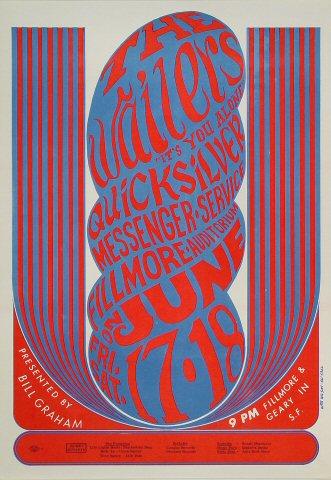
The First PrintingWhat the public saw
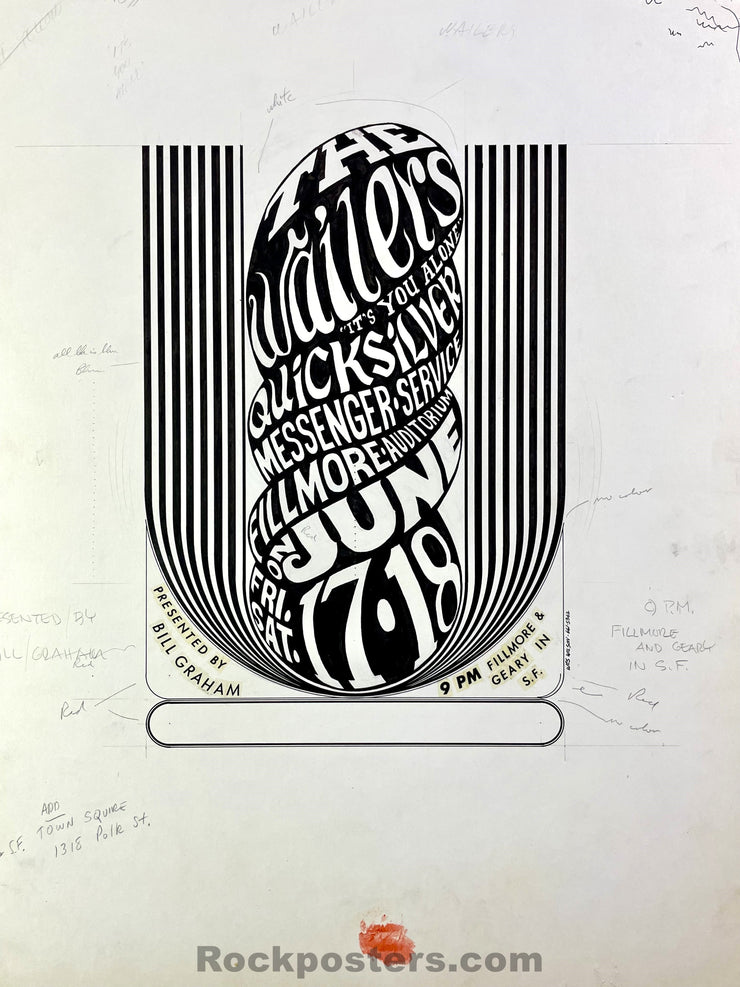
The Original ArtworkHow it was made
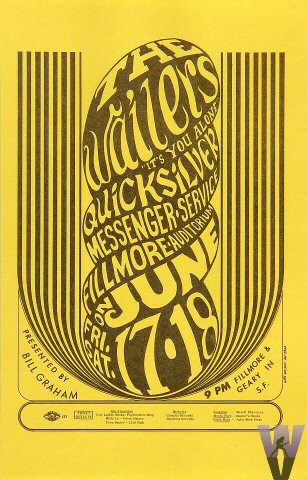
The HandbillHanded out on the street
San Francisco
Quicksilver Messenger Service
On the night of Friday, June 17, 1966, the Fillmore Auditorium held one of those bills that reads, in hindsight, like a hinge in the room where the door is still swinging. Bill Graham had been running shows at the corner of Fillmore and Geary for only a few months, and the scene he was helping to incubate was still a local secret — a year, almost to the season, before the Summer of Love would flood the Haight with pilgrims and press. This was not that yet. This was a Northwest garage band and a not-yet-recorded San Francisco quintet trading a ballroom for two nights, the poster reading "June 17-18," the whole enterprise closer to a neighborhood dance than a movement.
The headliner in the smaller type, The Wailers, came down from Tacoma, Washington, and they carried a pedigree that predated psychedelia entirely. These were the Fabulous Wailers — the men behind the 1959 sax-driven instrumental "Tall Cool One," and, more consequentially, the band whose 1961 cover of Richard Berry's "Louie Louie," issued on their own Etiquette label, planted the three-chord seed that the Kingsmen would later carry onto the national charts. Often called one of the very first American garage bands, they had, by 1966, hardened into a tough R&B combo still working, still cutting sides like that year's Outburst — Northwest muscle, road-tested, unsentimental.
Sharing the stage was Quicksilver Messenger Service, and it is worth remembering what they were not yet: a recorded act. John Cipollina's band had begun gigging only in late 1965 and would not release its Capitol debut until May 1968. In June 1966 they existed almost entirely as a live proposition — a ballroom band on the rise, building the extended, ringing guitar language that the vinyl would eventually document, but for now available only to whoever was in the room.
Over all of it hung the poster, BG-11, drawn by Wes Wilson — the artist who effectively invented the psychedelic handbill. This is an early entry in the series: Wilson had only started designing for Graham that February, and his signature melting, flame-shaped lettering was still evolving, legible here in a way it would soon abandon. He would make dozens more before money disputes ended his partnership with Graham in May 1967. On that June night, though, none of the endings had happened. Garage grit and nascent psychedelia simply shared a floor.
Research Sources
Researched 2026-06-13 (live pipeline, V1). Sources: classicposters.com / D.King Gallery / PosterGeist BG-series catalogs, Bill Graham Memorial Foundation show archive. BG-11: The Wailers + Quicksilver Messenger Service, Fillmore Auditorium, June 17 1966, art by Wes Wilson. (Note: "The Wailers" here is the Pacific Northwest garage band The Wailers, not Bob Marley's group — to confirm at editorial review.)
Verification Notes
Verified 2026-06-13 + antagonist pass. DATE June 17 1966 + Wes Wilson attribution: corroborated across BG-series catalog sources. ANTAGONIST FLAG: "The Wailers" is ambiguous — most likely the Tacoma garage-rock Wailers ("Tall Cool One"), NOT the Jamaican Wailers; the narrative avoids naming which to prevent a misattribution until editorial confirms. Venue cleaned (scaffold had the date jammed into the venue name). [EDITORIAL 2026-06-13: Fletch confirmed 'The Wailers' = the American (Tacoma) Wailers, NOT Marley. A collector in this effort OWNS the ORIGINAL ARTWORK for BG-11. Plan: TWO images on this event — (1) the standard printed poster (Wes Wilson, first printing, vellum, ~14x20), (2) the original hand-drawn artwork. Sources for the printed poster: classicposters/D.King Gallery/RecordMecca/rockposters BG-11 listings; Wilson's BG-11 is an early example where his evolving lettering style can be tracked across the first 30 Fillmore posters.]
Were You There?
Do you have memories of this show, or an original BG-11 poster? On This Day in Art Rock History celebrates the people who lived through the psychedelic era. Your stories and collections matter to this archive.
Comments